Before the First Light
Before there was a sky to look up at, before there were oceans to cross or cities in which two strangers might almost meet, there was only stillness.
It was not an empty stillness. It held everything that had not happened yet: every star, every river, every laugh that would one day escape at the wrong moment, every departure gate, every unanswered message, every wedding song waiting for musicians to find it. All of it existed without shape, folded into darkness.
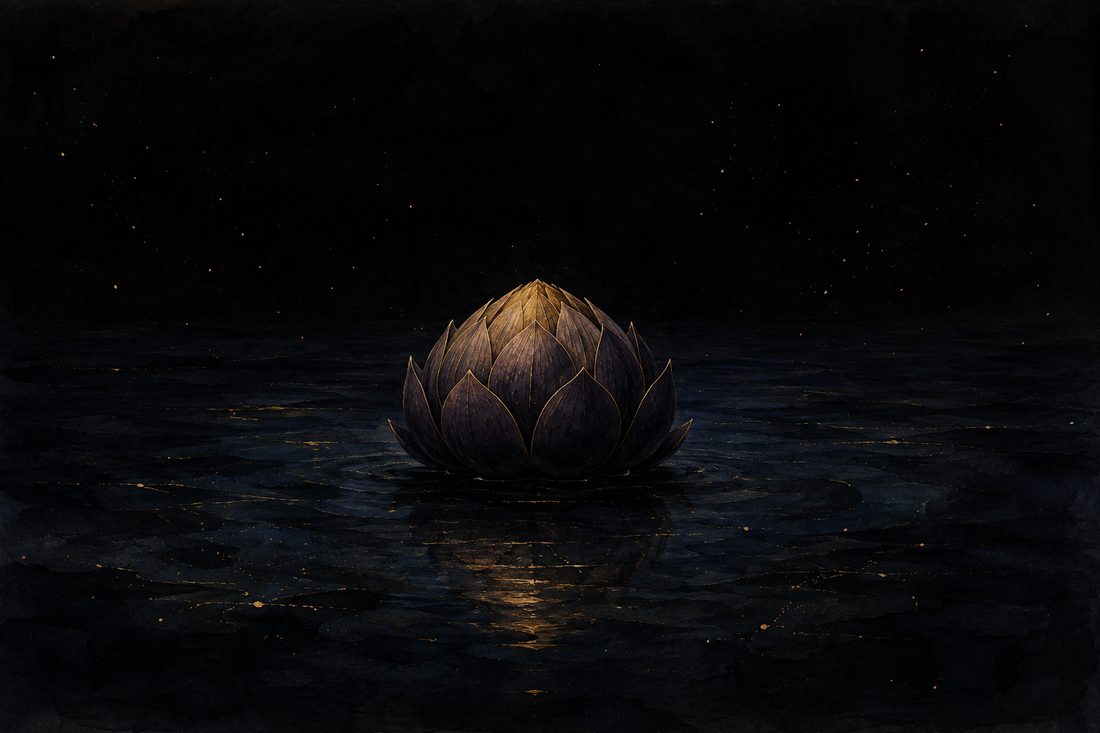
At the center of that darkness floated a lotus.
Its petals were closed. There was no wind to disturb them because wind had not yet been made, no light to reveal their color, and no time by which anyone could say how long they had been waiting. Within the flower sat Brahma, eyes closed, surrounded by a silence so complete that even silence had no name.
Then Brahma opened his eyes.

The first light did not arrive like lightning. It began as a softness, a warm gold spreading through the void as though creation itself had taken a breath. The darkness trembled. Space loosened and unfurled, not like a wall breaking, but like silk shaken open by an unseen hand. A low vibration moved through the newborn expanse. Some would later hear in it the sacred resonance of Om. Others, born much later, would measure the afterglow of a universe expanding from a point of impossible density. Both would stand before the same mystery and reach for different languages.

The Forging of Everything
The universe had no objection. It was too busy becoming.
Galaxies gathered from light and dust. Stars ignited, burned, collapsed, and scattered themselves outward. Nebulae opened in rose and saffron, their colors drifting across the dark like bougainvillea climbing an unseen celestial wall. Gravity pulled matter into shape. Hydrogen became fire. Fire became heavier elements: carbon, iron, calcium, gold. The material of mountains and blood, of bones and bangles, of temple bells and wedding rings, was forged in stars that would never know what they had made possible.



A Restless Blue World
One young sun gathered a family of worlds around it. The third was a restless sphere of molten rock, struck by debris, broken and rebuilt, wrapped in vapor and fire. If there had been anyone present to watch, the formation of Earth would not have looked graceful. It would have looked like a construction project with no manager, no safety policy, and several planets colliding before anyone had approved the design.


Still, the chaos settled. The surface cooled. Rain began to fall.
It fell for ages, filling the lowest places, gathering into oceans beneath a sky that still had no birds. Lightning moved across the clouds. Minerals dissolved. Molecules met, separated, and met again. Somewhere in the dark water, behind a boundary thinner than the future idea of skin, chemistry became restless enough to copy itself.

The Long Patience of Life
One cell became two.

No orchestra marked the occasion. There was no applause, no witness, and no ancient inscription declaring that life had begun. The first living thing floated quietly in a world that could not yet understand it. It knew nothing of stars, gods, families, flights, or love. It only continued.
That small persistence changed everything.
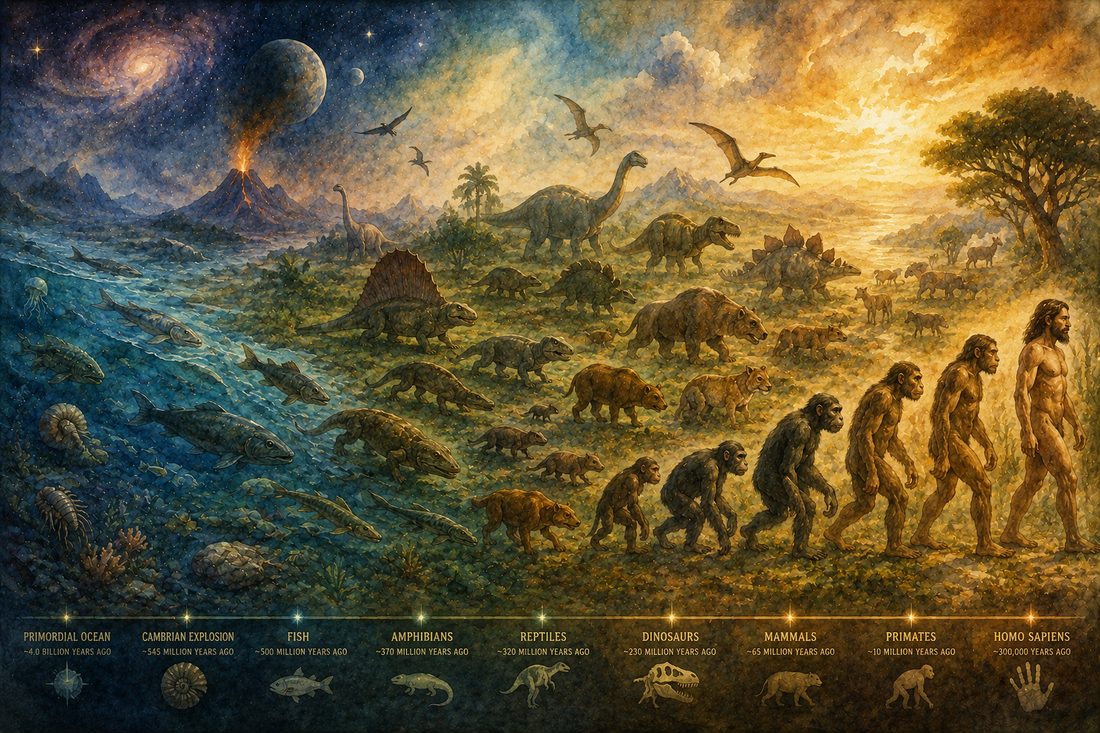
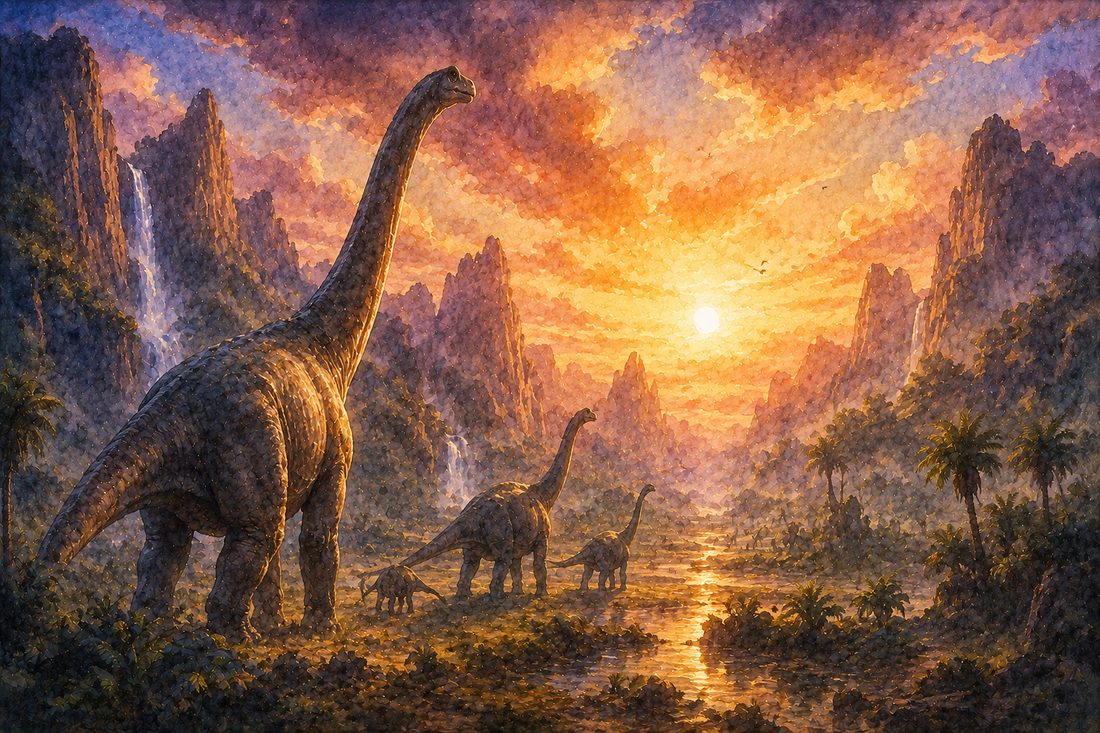
Life learned to cooperate. It grew more complicated. It developed structures, senses, mouths, spines, fins, shells, and eventually the unreasonable confidence to crawl out of the sea. Plants spread across the land. Forests rose. Creatures grew enormous. For more than a hundred million years, dinosaurs crossed plains and shook the ground beneath amber skies, reigning over Earth for a period that was still shorter than some Indian wedding ceremonies would later seem to guests waiting for dinner.
Then a light appeared above them.
The world changed again.
The giants disappeared, but life did not. Small mammals came out of hiding. They climbed, adapted, and multiplied. Hands became more precise. Eyes moved forward. Brains grew. Primates learned to stand, walk, shape stone, control fire, and tell stories under the same stars from which their bodies had been made.
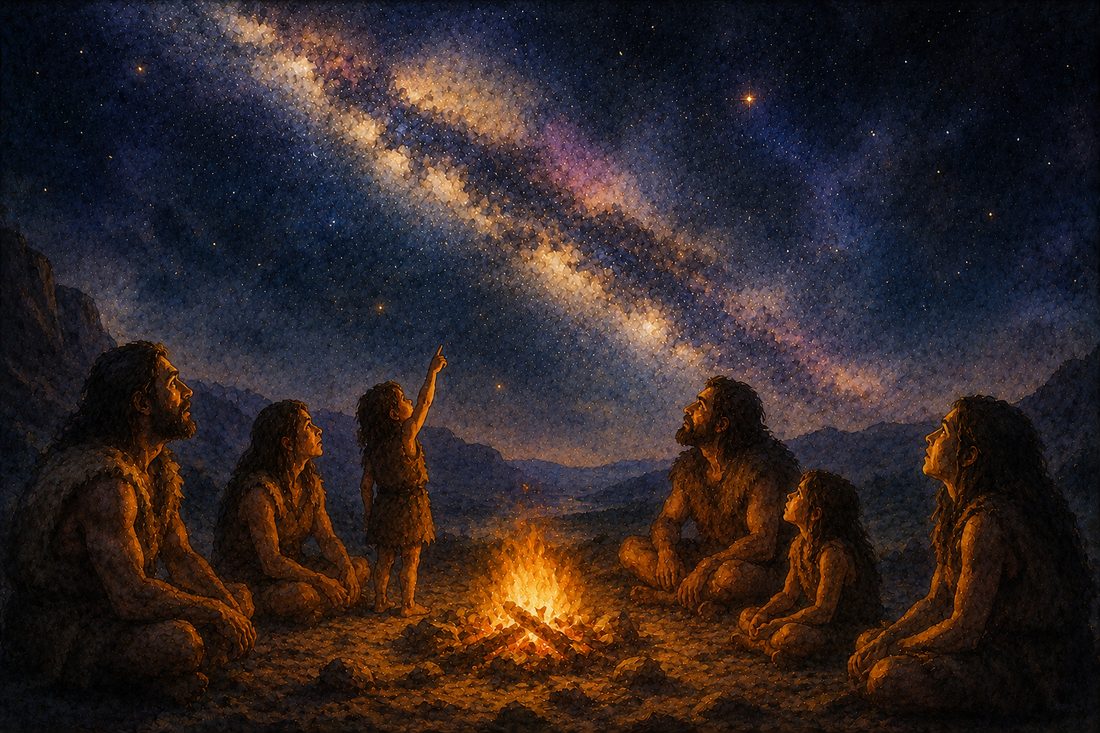
Human beings painted animals on cave walls and built settlements beside rivers. Settlements became cities, cities became kingdoms, and kingdoms became histories told differently by whoever survived them. People invented agriculture, mathematics, poetry, architecture, music, taxes, and the dangerous social question, "So, when are you getting married?"
Two Faint Paths
Through every age, they looked upward. Some saw constellations and gods. Others saw distances and laws. Some saw both and found no contradiction in wonder.
Across the vast machinery of creation, among all the lives that had begun and all the lives that might begin, two faint paths emerged.
One belonged to Yash.
The other belonged to Ankita.
They did not meet.
Not yet.
There are, perhaps, more universes than any mind can count. In one of them, Yash became a royal astronomer. He could predict an eclipse to the minute but failed to notice the woman standing beside him as the moon crossed the sun. In another, Ankita became a painter celebrated across kingdoms. She painted the face of a man she had never met, while that same man passed the gallery because he was looking down at a map.
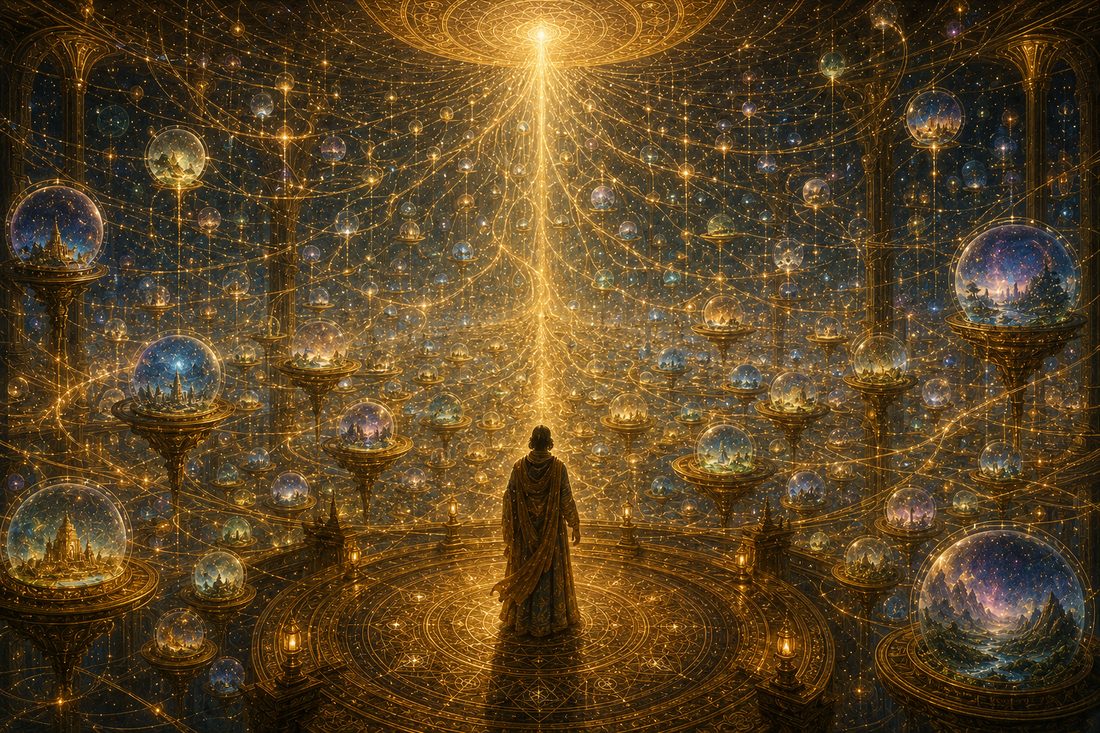
In another world, they were astronauts. They floated toward each other in silence, hands almost touching, until an alarm announced that the oxygen supply had become a greater priority than romance. In another, they attended the same wedding. Yash left early. Ankita arrived late. In another, they matched online and both waited for the other to send the first message. The universe grew old while neither typed anything.
Across realities, they came close enough for destiny to become impatient.

The Boy Who Kept Leaving
Destiny is often imagined as thunder. People expect mountains to shake, lamps to flicker, or a voice from the heavens to speak in perfectly measured sentences. But most of the time destiny does not announce itself. It adjusts details. It delays a flight. It keeps a door open for two seconds longer. It lets a name come up in conversation. It saves a message from being deleted.
In India, Yash grew beneath warm skies and the close attention of a family that regarded any departure as an operation requiring advice, food, and more advice. When the time came for him to leave, the household gathered around his suitcase as if preparing a vessel for a voyage across unknown seas.
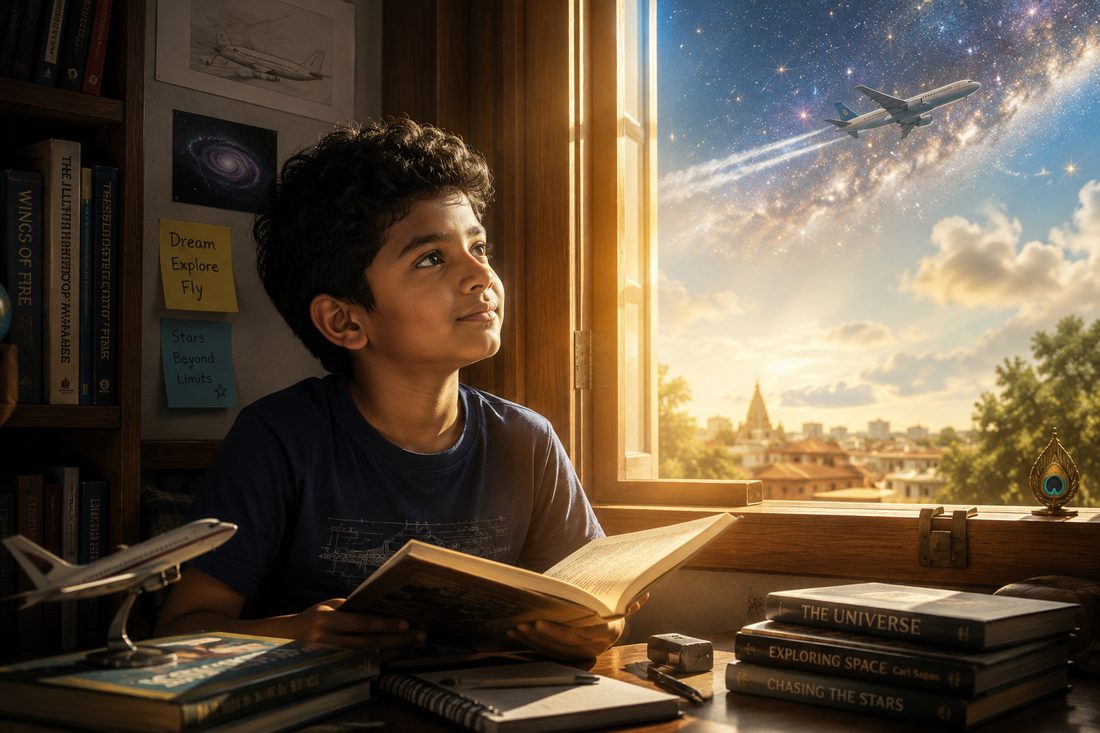
His mother adjusted his collar. His father repeated instructions that had already been given. A relative arrived with another container of food and placed it on top of an already overfilled bag.
"I think the suitcase is overweight," Yash said.
"Food made with love has no weight," the relative replied.
The airport scale, being both mechanical and unromantic, disagreed.
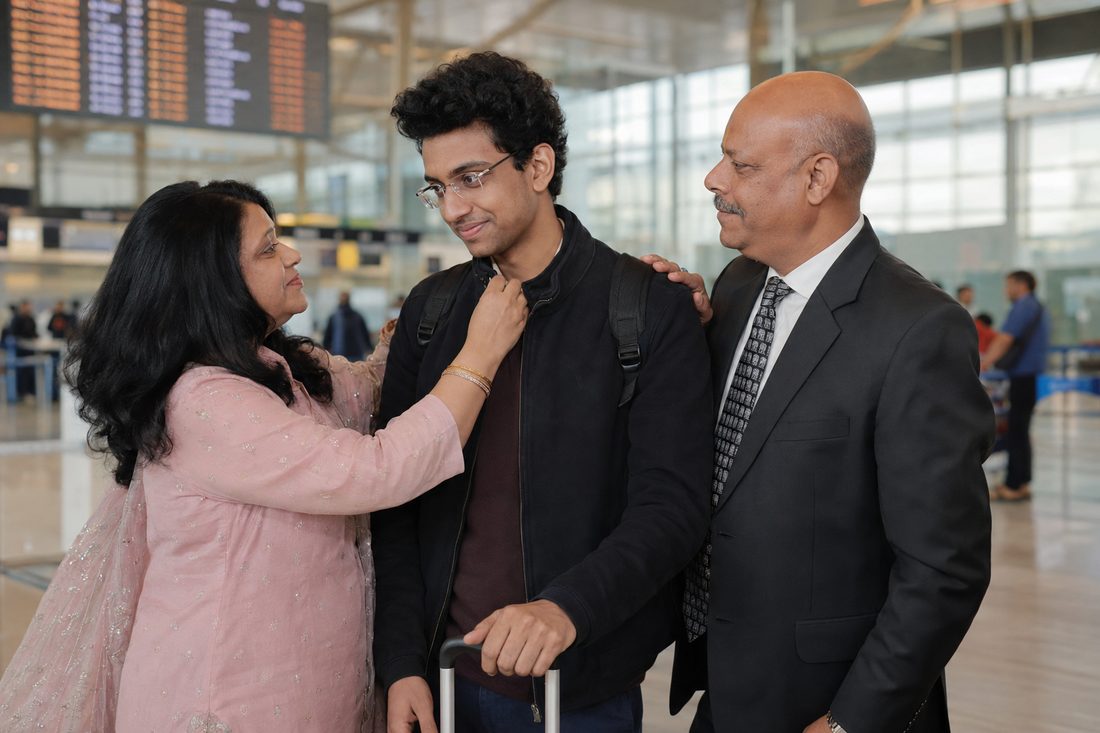
Yash traveled from India to Glasgow, in Scotland, carrying ambition, uncertainty, and enough homemade snacks to influence international customs policy. Scotland welcomed him with rain.
He emerged from a station under a grey sky, dragging luggage through streets that looked older than some dynasties. For eleven hopeful seconds, sunlight appeared. He stopped and looked up. Then the clouds closed again, as if the country had remembered its reputation.
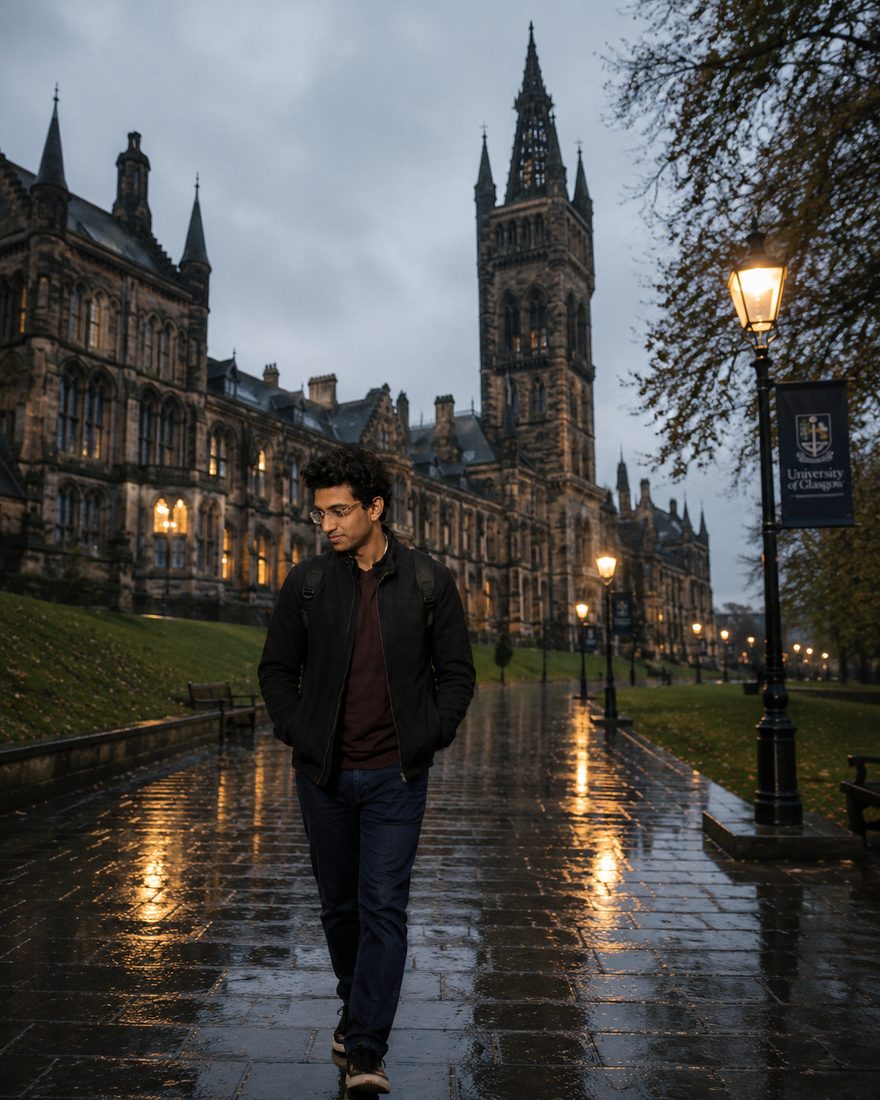
He learned new roads, new systems, and new forms of politeness. He learned that "You alright?" was often a greeting rather than an urgent medical assessment. He studied, worked, and learned to build confidence in increments. He learned to answer questions before he felt completely ready and to keep moving even when he did not know exactly where a road would lead.
Some evenings he sat by a window while rain ran down the glass and the city continued without him. The distance from home felt greatest at night, when familiar voices arrived through a phone screen and vanished when the call ended.
"Are you eating properly?" his mother would ask.
"Yes," Yash would say, angling the camera away from the instant noodles.
"Show me the kitchen."
"The connection is breaking."
He would hold perfectly still, attempting to imitate a frozen video.
"I can see you blinking," she would say.
Years moved. Another flight carried him across the Atlantic.
Boston greeted him with snow. At first, he smiled. The city looked transformed, clean and cinematic beneath white streets and yellow lamps. Then the wind struck him with the personal resentment of a place that considered exposed skin an insult.

The smile disappeared.
Boston became work, deadlines, coffee, friendships, long commutes, and winters that seemed less like seasons than arguments. He built a life through ordinary repetitions. He learned where to go, whom to call, how to solve problems, and how to sound certain even while privately searching the internet for reassurance.
Sometimes he walked beside the Charles River. City lights trembled on the dark water. Couples passed him, leaning into each other against the cold. He did not watch them with bitterness. He was not desperately searching for love. He was simply beginning to recognize the shape of its absence.
The realization did not arrive as sadness. It was quieter than that. It was an empty chair at the end of a long day. A story he wanted to tell and no particular person he wanted to tell it to first. A future that looked successful when viewed from a distance but seemed to be missing a voice inside it.
Eventually, his road turned south.
Washington, D.C. rose beneath a broad sky. Monuments stood in pale stone. Cherry blossoms drifted through the air with the confidence of a city that knew photographers were watching. Beyond it, Virginia opened into neighborhoods, highways, trails, restaurants, offices, and the beginnings of another home.

Yash settled into the D.C.-Virginia region. He worked. He built routines. He met friends for dinner and listened to married people offer relationship advice with the certainty of sages who had personally solved human companionship.
"You need to be open," one friend told him.
"I am open," Yash replied.
"Emotionally."
"Let us remain realistic."
The friend laughed, but the sentence stayed with him. Beneath the humor, Yash knew that every journey had taught him how to leave, arrive, adapt, and continue. None had taught him how to let another person fully enter the life he had built.
The Girl Who Kept Saying No
Far away, another story was already moving toward him.
A child named Ankita grew in India surrounded by family, festivals, questions, color, and the kind of affection that could be expressed equally through tenderness and unsolicited advice. She had bright eyes, quick humor, and an instinct for making ordinary places feel warmer. As a girl, she arranged flowers beside oil lamps, laughed without caution, and observed the world carefully enough to know that beauty was not only something one possessed. It was something one noticed and added.

Every universe receives a blessing. Not always as a miracle. Not always as thunder. Sometimes the blessing is rain after a long dry season. Sometimes it is music heard when someone had forgotten how to feel. Sometimes it is a person whose presence makes the world gentler without demanding credit for the change.
In this universe, that blessing arrived as Ankita Aggarwal.
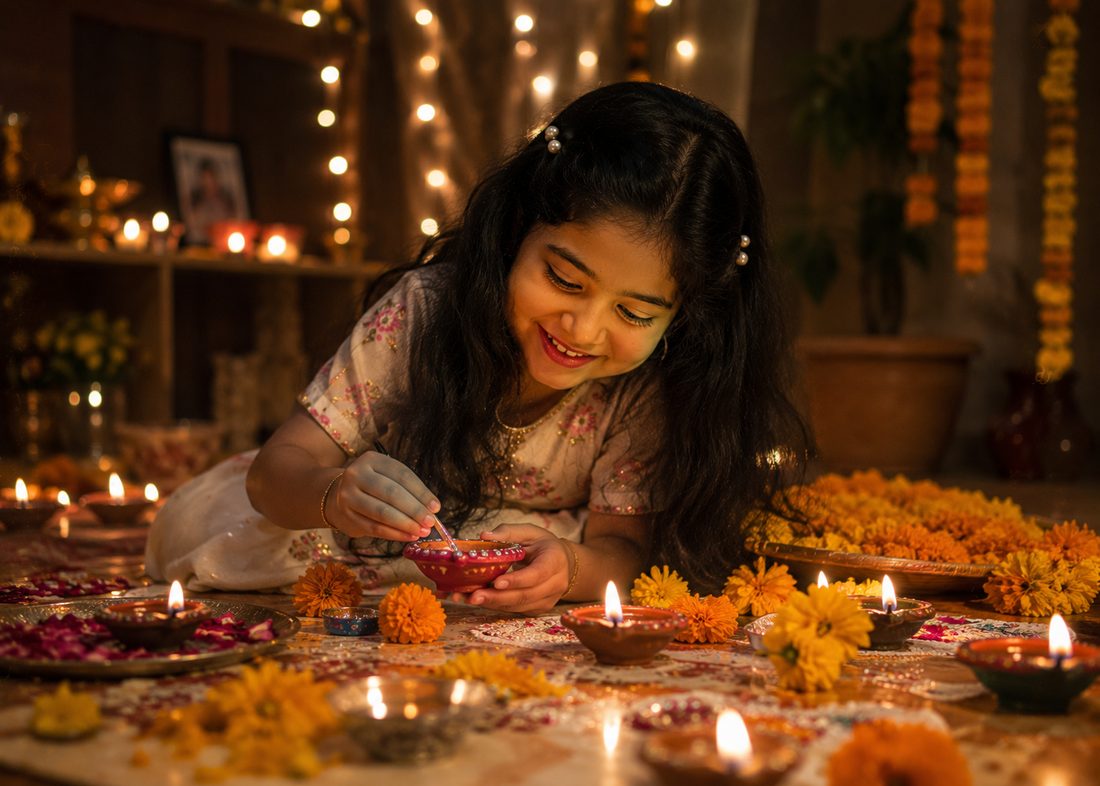
She grew into a woman who was warm without being easily persuaded, generous without being naive, and perfectly capable of smiling while deciding that an answer was absolutely no. She knew the difference between attention and understanding, between confidence and performance, between a life that looked acceptable in a profile and one she could actually inhabit.
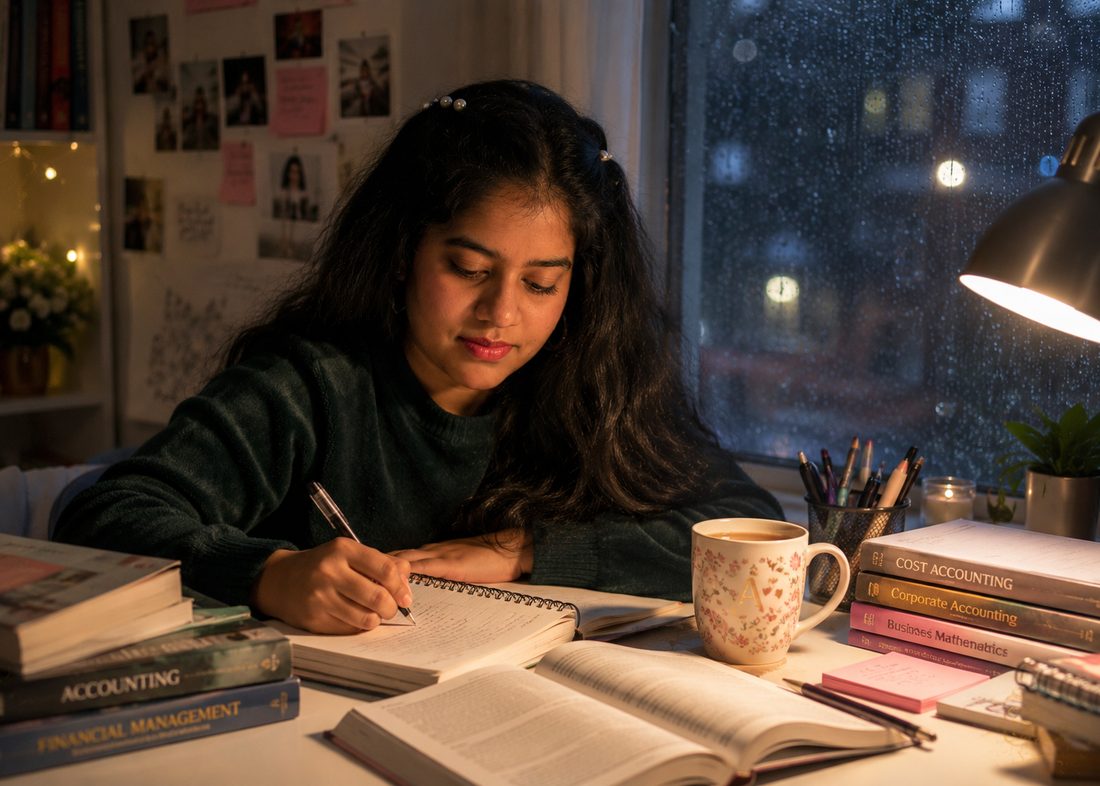
Naturally, introductions began.
A phone would be placed in front of her. A photograph would appear. Someone would say, "Very good family," as though this were a complete psychological assessment.
"What does he do?" Ankita would ask.
"Something in computers."
"What specifically?"
"He sends emails."
"That narrows it down to everyone."
There was the man who spoke for ten uninterrupted minutes about discipline and his gym routine.
"Do you ask questions?" Ankita asked.
"Of course," he said, before pausing thoughtfully. "What is your preferred protein intake?"
There was the man posing beside a luxury car.
"Is that your car?" she asked.
"It belongs to my cousin."
"Does your cousin come with the proposal?"
There was the man who announced that he and his mother made all major decisions together. His mother leaned into the video frame to correct him.
"Not all decisions," she said.
"Most decisions," he replied.
"Every decision," she said.
There was another who proudly described himself as spontaneous.
"That sounds nice," Ankita said.
"I have created a five-year calendar for spontaneity."
He held up a spreadsheet.
Ankita quietly closed the laptop.
She was not rejecting love. She was rejecting poor writing.
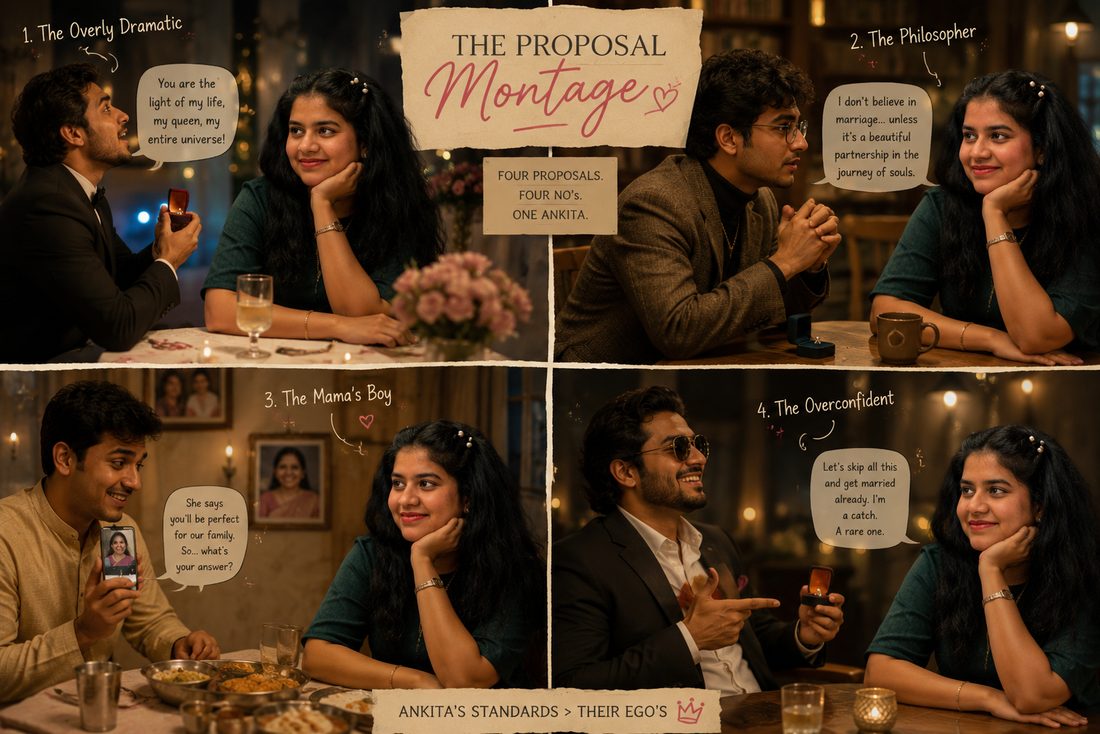
Each no removed one possible future. Somewhere beyond ordinary sight, a cosmic clerk might have watched entire timelines vanish while Ankita efficiently eliminated every universe in which she would be expected to admire a borrowed car or consult a schedule before being surprised.
Then Ankita crossed the ocean.
At the airport in India, her family gathered with the same rituals that had surrounded Yash years earlier. Food was packed. Advice was repeated. Tears were disguised as practical concerns.
"Call us after landing," someone said.
"I will."
"And before landing."
"That may be difficult."
Her plane lifted into the evening sky. India became a field of lights beneath her, another constellation viewed from above. As the aircraft climbed, stars appeared beyond the window. For a moment, the plane seemed to pass through the same darkness that had existed before Brahma opened his eyes.
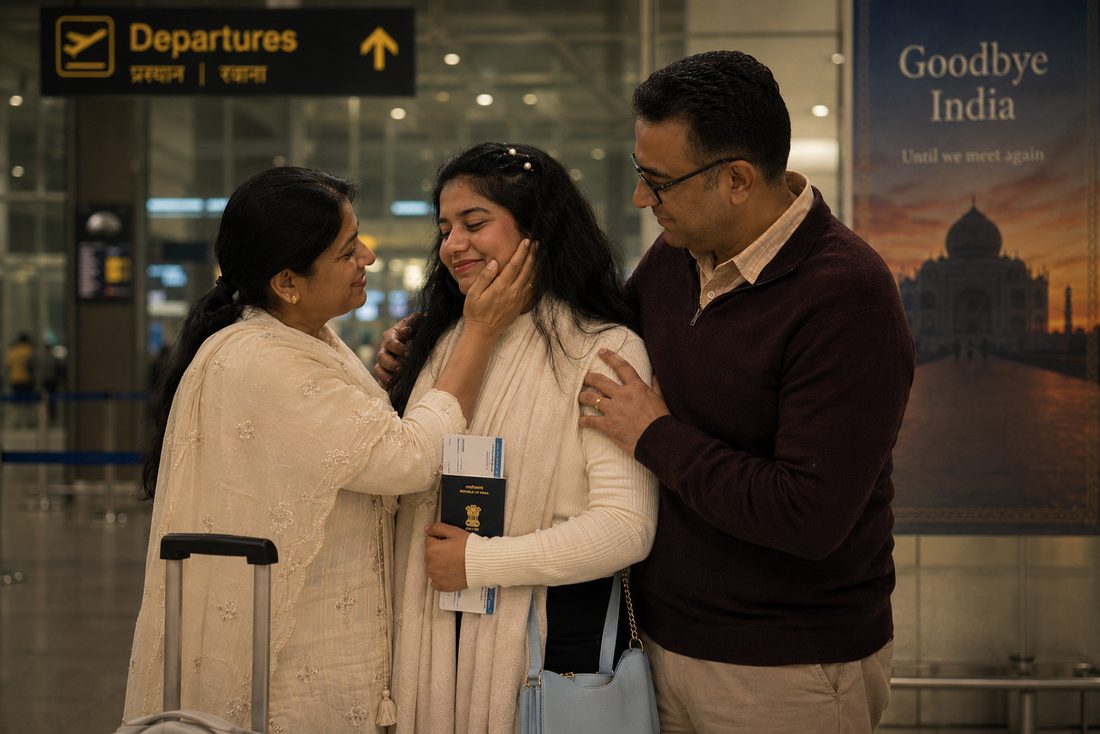
Ankita saw only clouds, but some journeys are recognized by a part of us that does not require proof.
She arrived in the United States not knowing precisely what waited. The airport doors opened with the sort of golden light that, in a film, would have announced the entrance of destiny. Her hair moved in a current of air. A violin might have begun somewhere unseen.
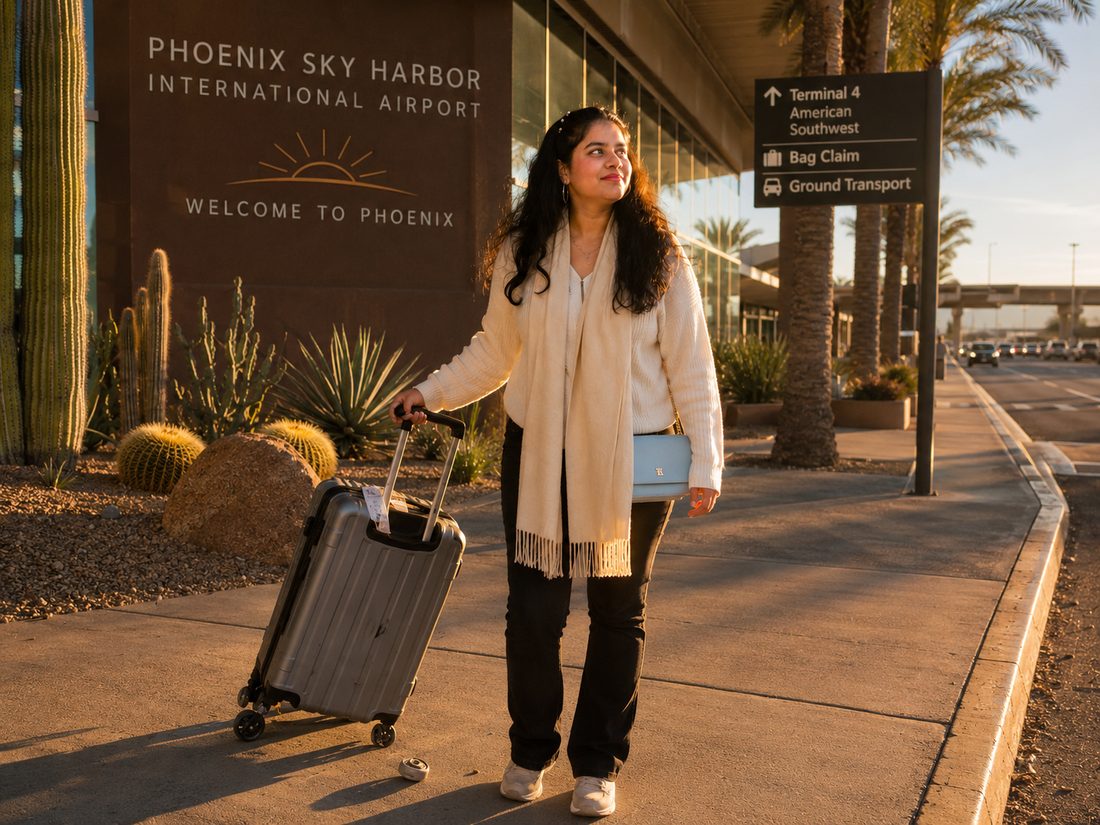
Then one wheel broke off her suitcase.
"Of course," she said, and dragged it forward.
Destiny might be divine. Luggage remained mortal.
The Doorway the Universe Had Been Building
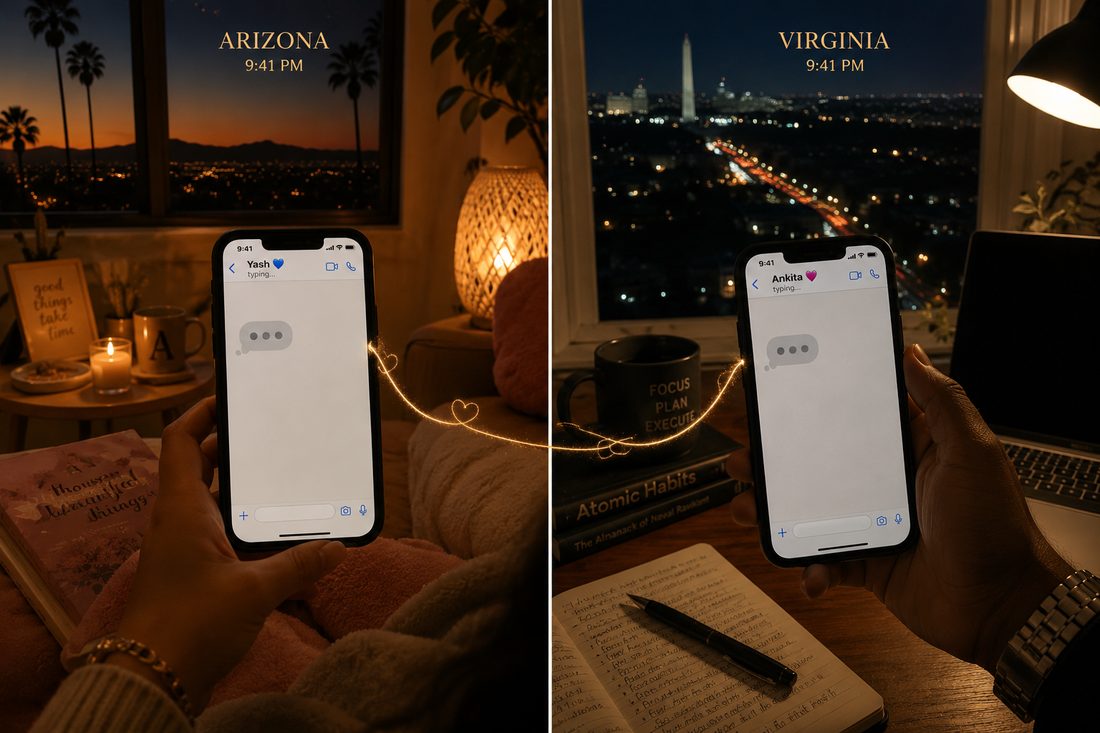
For a while, Yash and Ankita continued through separate routines. They occupied the same country, breathed under the same sky, and remained strangers. Their lives moved like two lines that appeared parallel only because no one could yet see where they bent.
Then a name came up.
A connection was made. A profile was shared. A message was considered, ignored, reconsidered, typed, deleted, and typed again. Nothing about the moment looked cosmic. No galaxies shifted visibly. No temple bell rang without being touched.
Yet somewhere, among the countless possible worlds, one timeline brightened.

On the day they were to meet, Yash arrived early at the restaurant. He selected a table, sat down, and immediately decided it looked too formal. He moved to another table, then worried that changing tables made him appear indecisive, and returned to the first.

A server watched the entire sequence.
"First date?" the server asked.
"Is it obvious?"
"You have changed tables three times."
"I was evaluating the lighting."
"Of course."
Outside, Ankita approached through the warm evening. A petal caught briefly in her hair. She did not notice. Inside, Yash looked toward the door as it opened.
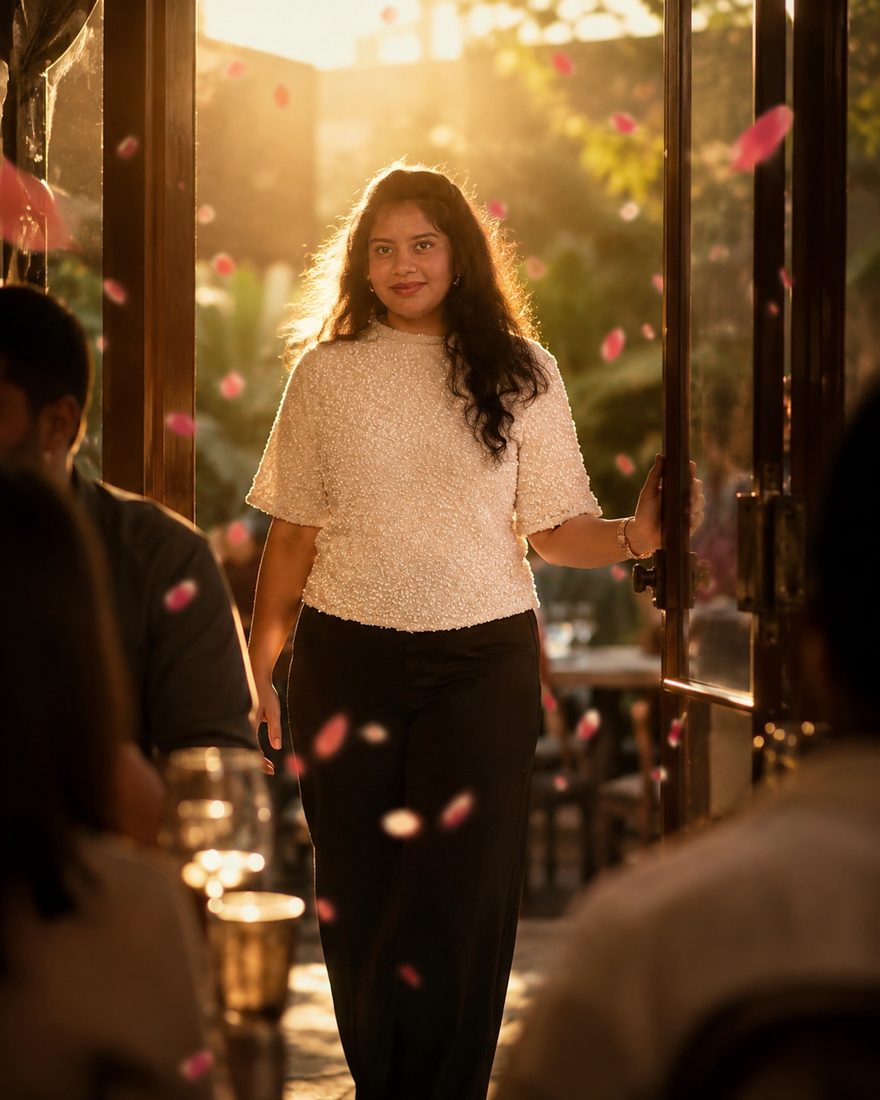
For one suspended instant, the restaurant seemed to fall away. The room softened. Conversation became distant. The light behind her turned golden, and the universe, which had spent billions of years preparing this ordinary doorway, appeared ready to congratulate itself.
Then the server placed two glasses of water on the table.
"Still or sparkling?"
Yash blinked. "Sorry?"
Ankita sat down and looked at the server.
"He was evaluating the lighting," she said.
The server nodded solemnly. "Of course."
Their first conversation began with the caution of two people who had already lived enough life to know that first impressions could be misleading.
"How was the drive?" Yash asked.
"Long enough to reconsider this twice."
"Only twice?"
She smiled.
The careful sentences lasted only a few minutes. Soon they were talking about India, families, travel, work, and the peculiar loneliness of building a home far from the first one. They compared stories of parents asking to inspect kitchens through video calls. They spoke of ambition and exhaustion, of learning new cities, of the quiet pride that comes from surviving a difficult chapter without becoming hardened by it.
Then Yash made her laugh.
It was not the courteous laugh one gives a stranger. It escaped before she could measure it. It changed her face and reached something in him before he understood what it was.
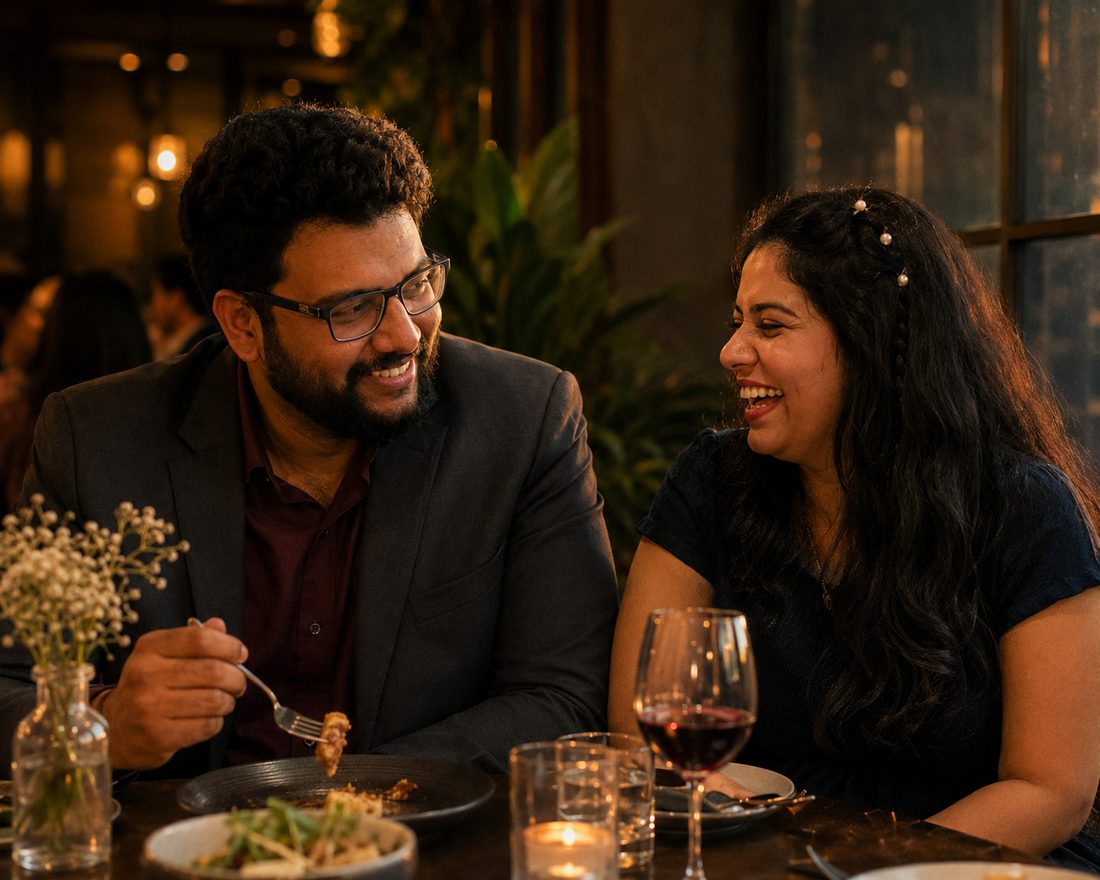
Their eyes met.
The conversation paused, and for half a second the silence seemed large enough to contain a future. Yash opened his mouth, perhaps to say something honest, perhaps only to fill the quiet.
The waiter arrived carrying food.
"Careful," he said. "The plate is very hot."
The moment vanished.
"Saved by the appetizer," Ankita said.
All the Unfinished Moments
After that evening, their lives filled with unfinished moments.
During a walk, their hands drifted closer until a cyclist passed between them ringing a bell. One night, they sat in a car after dinner, neither willing to say the evening had ended. Yash turned toward her just as her phone rang.
"It is my mother," Ankita said.
"Answer it."
"She will ask where I am."
"Where are you?"
"That is not the point."
Another time, rain caught them without warning. Yash removed his jacket and placed it around her shoulders.
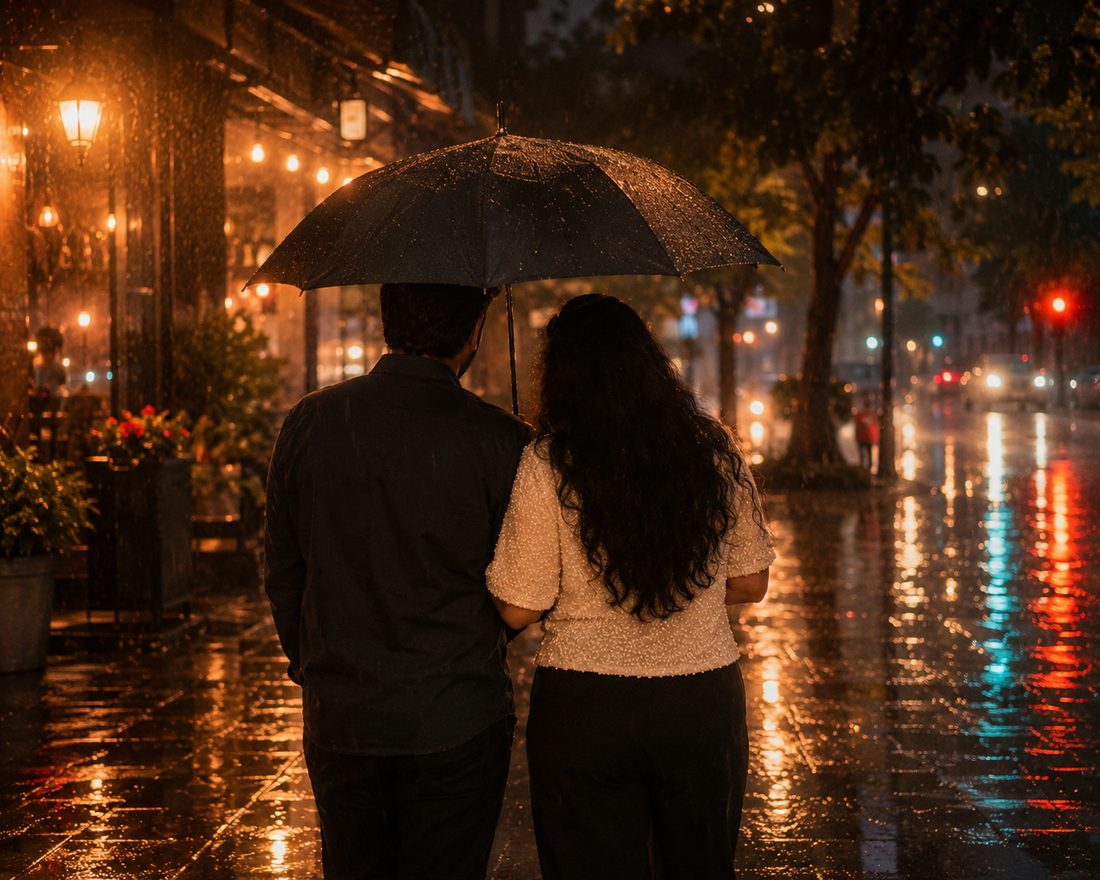
She touched the fabric. "This is already wet."
"Symbolically, it is excellent."
They argued over directions.
"The map says left," Yash insisted.
"You missed the turn."
"The map changed its mind."
"The map has accountability. You do not."
They debated restaurants through a ritual repeated by couples across civilizations.
"Anything is fine," Ankita said.
"Indian?"
"Not Indian."
"Italian?"
"Too heavy."
"Thai?"
"Not today."
"Then anything is not fine."
"Correct."
It would have been easy to mistake their story for a collection of jokes and near-misses. But underneath the interruptions, something steady was forming.
There were difficult days when one listened and the other did not have to pretend to be fine. There were calls that began with practical questions and lasted an hour. There were small apologies, stubborn silences, and the decision to return after both. There were ordinary messages that carried more care than grand speeches ever could.
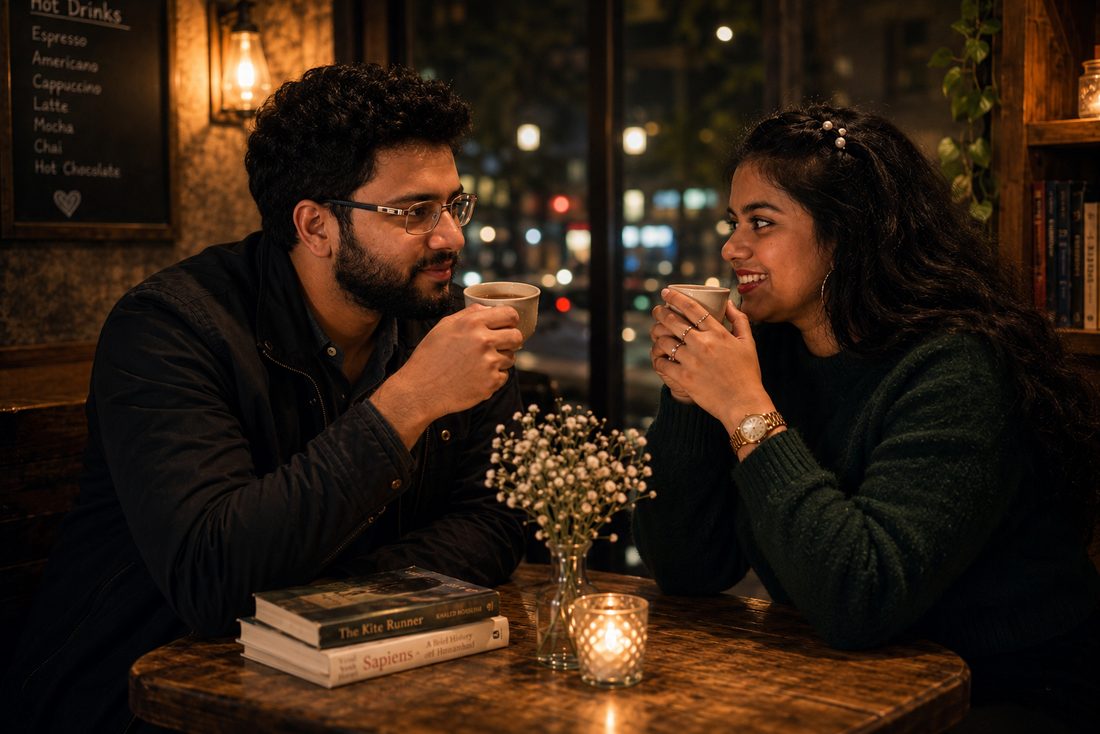
Did you reach?
Did you eat?
Tell me when you land.
Do you need anything?
Love did not announce itself with an orchestra. It arrived through repetition. It entered grocery aisles, traffic, late dinners, tired conversations, and the quiet relief of not having to explain everything from the beginning. It became the person whose voice one wanted at the end of a day, the first witness to good news, the safer place after disappointment.
Yash began to understand that being open did not mean surrendering the life he had built. It meant allowing another life to alter its shape.
Ankita began to see that the right person did not arrive as a flawless answer. He arrived as someone with whom the questions could be lived honestly.
The families entered the timeline.
Calls crossed oceans. Photographs were exchanged and examined with the concentration of intelligence analysts.
"He looks serious," one relative said.
"That is just the beard," another replied.
"Does he always wear glasses?"
"Only when he wants to see."
Ankita's photograph inspired its own investigation.
"She has a beautiful smile."
"Very graceful."
"How tall is she?"
"Why?"
"I am collecting information."
"For whom?"
"No one."
Greetings became conversations. Conversations became plans. Plans became calendars. Calendars became group chats, and the group chats multiplied beyond the known laws of physics.
Good morning.
Please review.
Wrong group.
Delete this.
Who changed the spreadsheet?
Kindly confirm.
Confirmed.
I did not confirm.
Yet beneath every logistical discussion was something tender. Two families were learning the names, habits, and histories that had shaped the people their children loved. Two separate pasts were being invited into one future.

Far beyond Earth, the universe continued expanding. Stars were still being born. Others were dying, releasing into space the materials from which distant worlds might someday be formed. On Earth, the first oceans remained present inside every living cell. The age of dinosaurs survived in stone. The first fires lit by human hands echoed in every lamp placed before a shrine.
All of history had narrowed toward something remarkably small: two people choosing not to end a conversation too soon.
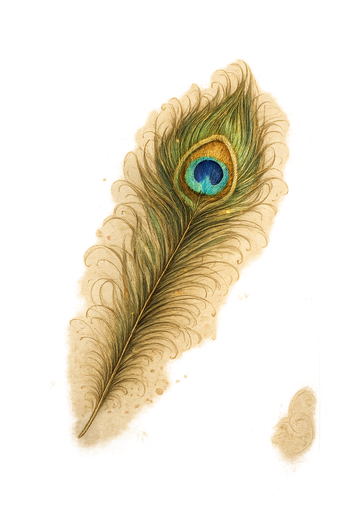
A peacock feather moved through the story like a quiet signature.
It passed through the gold of the first light. It drifted across ancient oceans and forests. It followed the road from India to Glasgow, from Glasgow to Boston, from Boston to Washington and Virginia. It crossed Ankita's journey over the ocean and appeared, unnoticed, in the spaces between their meetings. It belonged to Krishna's crown, to beauty that did not need symmetry to be perfect, to playfulness held inside devotion.
Perhaps no one saw it. Perhaps symbols are most powerful when they do not demand to be noticed.
Creation had spent billions of years making elements from stars. Evolution had spent millions of years teaching life to change. Human history had built ships, roads, cities, airports, phones, and the systems through which one carefully worded message could cross a distance in a second.
Yash had traveled from India to Glasgow, then to Boston, and finally to the D.C.-Virginia region. Ankita had traveled from India to the United States, carrying her humor, discernment, warmth, and an impressive ability to reject unsuitable candidates without rejecting hope itself.
Their paths had nearly crossed in a thousand imagined worlds. In this one, they finally did.
On September 18, 2026, the lives they had built separately would be joined before the people who had shaped them.
"Locked in for life," Yash once called it, pleased with the cinematic weight of the phrase.
Ankita looked at him. "That sounds like a prison sentence."
"I was told it sounded dramatic."
"By whom?"
"The universe."
"The universe needs better writers."
Somewhere, perhaps, Brahma smiled.
The Universe Holds Its Breath
But this is not the ending.
The arch is still waiting beneath bougainvillea. The lamps have not yet been lit. Music has not yet crossed the room. Two chairs remain empty. Families are still traveling. Friends are still choosing clothes, changing their minds, and asking what time they truly need to arrive.

The final petal of the lotus has not opened.
The peacock feather rests between two unfinished places.
And after stars, oceans, dinosaurs, migrations, missed turns, first meetings, family calls, and countless almosts, the universe is still becoming.
It is still holding its breath.
It is still waiting to see what happens next.